
For four relentless hours, a 13-year-old Australian boy swam alone through open water, battling exhaustion, cold and a powerful current — all to save his family. Now, speaking publicly for the first time, he has revealed just how close he came to giving up.
“There were moments I wanted to stop,” he admitted quietly. “I was so tired I couldn’t feel my arms properly anymore.”
The ordeal began as a routine coastal outing that spiraled into chaos when a strong rip current dragged his family further from shore. What initially felt manageable quickly became dangerous as waves intensified and distance from land grew. With no flotation devices and no immediate rescue in sight, the family realized they were in serious trouble.
After hours of struggling to stay afloat, the teenager made the decision that would ultimately define the night. He would swim to shore for help.
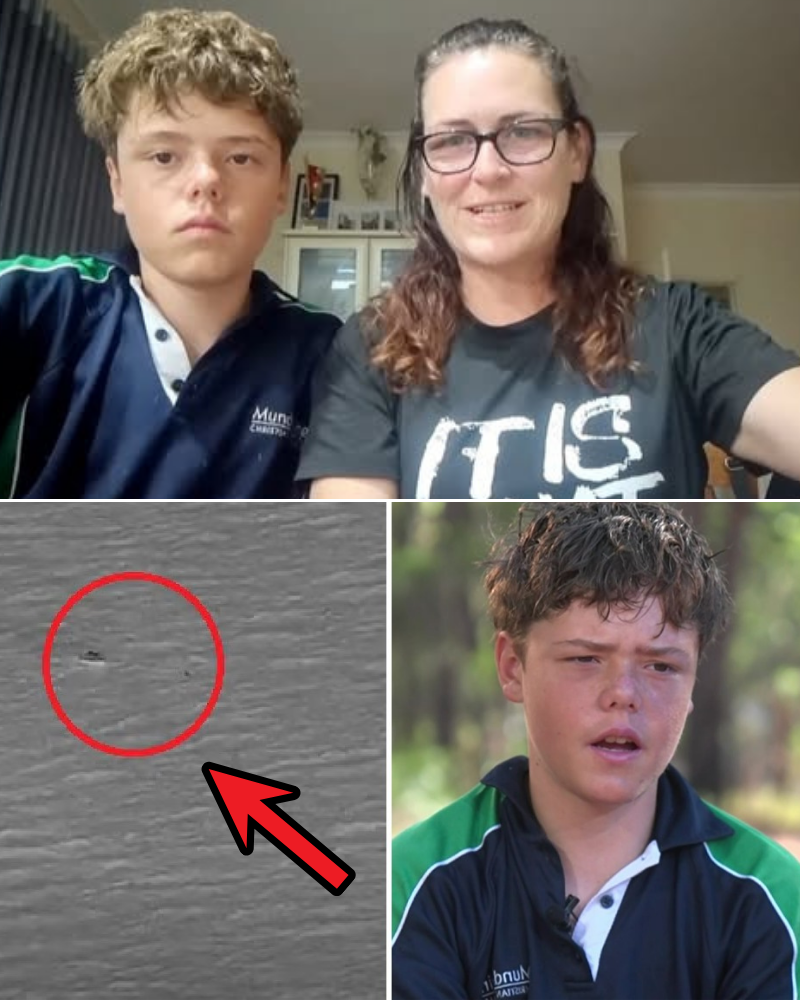
The estimated distance was several kilometres. Conditions were far from calm. The ocean swelled unpredictably, and the current worked constantly against forward movement. By the time he began his swim, he was already physically drained from treading water and supporting younger family members.
Experts say that prolonged exposure in open water dramatically increases the risk of muscle fatigue, dehydration and hypothermia. Even trained swimmers can falter under such strain. For a 13-year-old to undertake a multi-hour swim in those conditions would test not only physical endurance but psychological resilience.
The boy described the mental battle as the hardest part.
“At the start, I thought I could do it easily,” he said. “But after a while, it felt like the shore wasn’t getting any closer.”
He tried not to look back at the vast stretch of water behind him. Instead, he counted strokes. Ten at a time. Then another ten. Breaking the impossible distance into small, manageable pieces became his survival strategy.
As darkness approached, fear intensified. Alone in the water, surrounded by rolling swells, the isolation became overwhelming. “There were times I felt completely alone,” he said. “I kept thinking, what if I don’t make it?”
Then came the thought that surprised even him.
“It wasn’t about being a hero,” he explained. “I just didn’t want my little brother to be scared.”
That single, simple focus — not bravery, not recognition — kept him moving forward when his body urged him to stop. Survival psychologists note that concentrating on protecting someone else can override personal fear and fatigue. In crisis situations, purpose can become a powerful fuel source.
After nearly four hours, muscles burning and vision blurred from salt and exhaustion, he finally saw the shoreline clearly enough to know he would make it. When he reached land, he stumbled onto the sand, barely able to stand.
But there was no time to rest.
He immediately alerted nearby residents and emergency services, providing crucial details about wind direction and drift patterns. Rescue crews were dispatched swiftly, eventually locating his family after what authorities described as a complex maritime response.
Medical teams later confirmed that all family members survived with early signs of hypothermia but no critical injuries. Emergency responders have since praised the teenager’s composure under extreme pressure.
“He demonstrated remarkable mental strength,” one official said. “Panic would have changed the outcome.”
In the days following the rescue, the boy has struggled to process the attention. While social media has labeled him a hero, he insists he was simply doing what anyone would do.
“I was scared the whole time,” he admitted. “I just kept swimming.”
Coastal safety authorities have used the incident as a reminder of the dangers posed by rip currents and shifting tides along Australia’s shores. Even experienced swimmers can be caught off guard. They emphasize the importance of swimming in patrolled areas and checking conditions before entering the water.
For the teenager, however, the memory remains intensely personal. He recalls flashes of doubt, moments when stopping seemed easier than continuing. Yet each time, he pushed forward.
The four-hour swim has already become part of Australian coastal lore — not because of dramatic headlines, but because of the quiet honesty behind it. A boy who admits he wanted to give up. A child who felt fear. And a decision to keep going anyway.
Sometimes heroism is not about fearlessness. It is about swimming through fear — one stroke at a time.
