
In a heart-stopping breakthrough that has plunged the already agonizing disappearance of four-year-old August “Gus” Lamont into even darker territory, South Australian police have made a dramatic arrest: a close relative of the missing boy has been taken into custody following the discovery of a wrapped child’s item buried near a rural shed on the family’s remote Oak Park Station property.
The chilling find—described by sources as a small, carefully concealed object wrapped in material consistent with a child’s clothing or blanket—came during an intensified forensic sweep of the 60,000-hectare sheep station near Yunta, where Gus vanished without a trace on September 27, 2025. The item, unearthed under the cover of darkness in a search that extended into the early hours, is now central to the investigation and has prompted immediate action against a family member long under scrutiny.
Detectives from the Major Crime Investigation Branch swooped in swiftly after the discovery, arresting the relative—someone who resided at the homestead and was known to Gus—on suspicion of involvement in the boy’s disappearance and possible foul play. While police have not yet released the suspect’s name or exact charges publicly, insiders confirm the arrest stems directly from the buried evidence and mounting inconsistencies in statements provided by household members.
The breakthrough marks a seismic shift in a case that has gripped Australia for more than four months. Gus, a bright-eyed toddler with a love for playing in the dirt, was last seen around 5 p.m. on that fateful Saturday, reportedly spotted by his grandmother on a mound of dirt outside the homestead. She stepped away for about 30 minutes to prepare dinner; when she returned, he was gone. No cries. No footprints leading away. No signs of struggle. Just an empty yard in the vast outback silence.
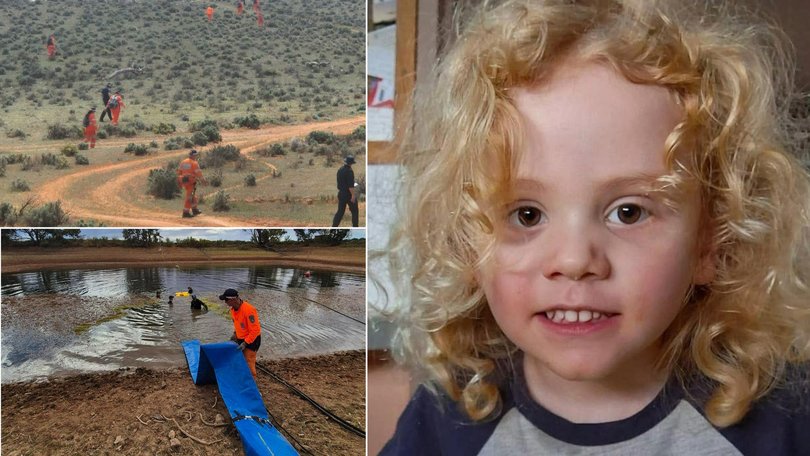
What followed was one of the most exhaustive searches in South Australian history: drones with thermal imaging, cadaver dogs, ground teams, aircraft, and volunteers combing dams, mine shafts, and thousands of hectares. Nothing. The initial theory—that Gus wandered off into the bush—was gradually eroded as no evidence supported it. No tracks. No clothing snags. No sightings beyond the immediate homestead area.
By early February 2026, police escalated the probe. On February 5, they declared the disappearance a “major crime,” revealing “a number of inconsistencies and discrepancies” in family timelines and accounts. A person residing at Oak Park Station—someone close to Gus but emphatically not one of his parents, Jessica Murray or Joshua Lamont—had withdrawn cooperation after evidence seizures, including vehicles, a motorcycle, and electronic devices. That person became the prime suspect.
The buried item near the rural shed was the tipping point. Hidden deliberately in a spot that could easily be overlooked amid farm clutter, the wrapped object raised immediate alarms. Forensic teams worked through the night to recover and examine it, with preliminary indications suggesting it belonged to a child of Gus’s age. The discovery shattered any lingering hope of a simple misadventure and pointed squarely toward concealment—perhaps panic after an accident, or something far more sinister.
Grandparents Josie and Shannon Murray, who were home when Gus disappeared, have hired high-profile lawyers and issued statements expressing devastation while insisting the family has cooperated fully. “We are absolutely devastated by the media release of SAPOL Major Crime,” their legal team said. “The family has cooperated fully with the investigation and want nothing more than to find Gus and reunite him with his mum and dad.”
Yet the locked gates, restricted access warnings, and now this arrest have fueled public outrage. Social media erupts with demands for transparency: “Why bury a child’s item if nothing happened?” “The shed was right there—how did they miss it for months?” “Someone in that house knows exactly what went down.” Theories range from accidental death (a fall, a tragic mishap) covered up in fear of consequences, to darker possibilities that investigators are now pursuing.
The property’s isolation—deep in the outback, far from neighbors or roads—makes concealment tragically plausible. Oak Park isn’t just a home; it’s a fortress of land where secrets could stay buried for years. Police drained dams twice, probed mine shafts, and scoured radii up to 5.47 km from the homestead. But the shed area, part of the inner working spaces, remained largely off-limits until forensic warrants forced entry.
For Gus’s parents, the pain is unimaginable. Jessica and Joshua have stayed largely silent amid the storm, but the arrest of a relative must feel like a betrayal layered on top of grief. Police continue to stress that the boy’s mum and dad are not suspects, focusing instead on the household resident who pulled away from cooperation.
As the sun rises over the red dirt of Yunta once more, the wrapped item—now in evidence—stands as a silent scream from the dark night. Was it Gus’s favorite toy, hastily hidden? A piece of clothing stained with tragedy? Or the final piece that cracks open what really happened on that September afternoon?
The arrest brings no body, no closure—yet. But it shatters the wall of silence around Oak Park Station. Task Force Horizon remains relentless: more searches, more interviews, more forensic analysis. The $1 million reward equivalent in public attention lingers, but the truth may finally be clawing its way out of the ground.
Little Gus Lamont—missing for over four months—deserves answers. And if a relative buried evidence in the ᴅᴇᴀᴅ of night to protect a terrible secret, the outback’s shadows are about to be flooded with light.
The case is far from closed. It’s just beginning to crack wide open.
