At 4:20 in the morning, when Minneapolis still lay wrapped in darkness and frost clung to rooftops, a quiet residential neighborhood became the center of one of the most coordinated federal operations in recent memory. The streets were narrow and still, lined with modest homes whose porch lights glowed faintly against the winter air. Nothing about the setting suggested danger. There were no sirens echoing through the night, no visible signs of unrest. Yet within minutes, that calm would be shattered.
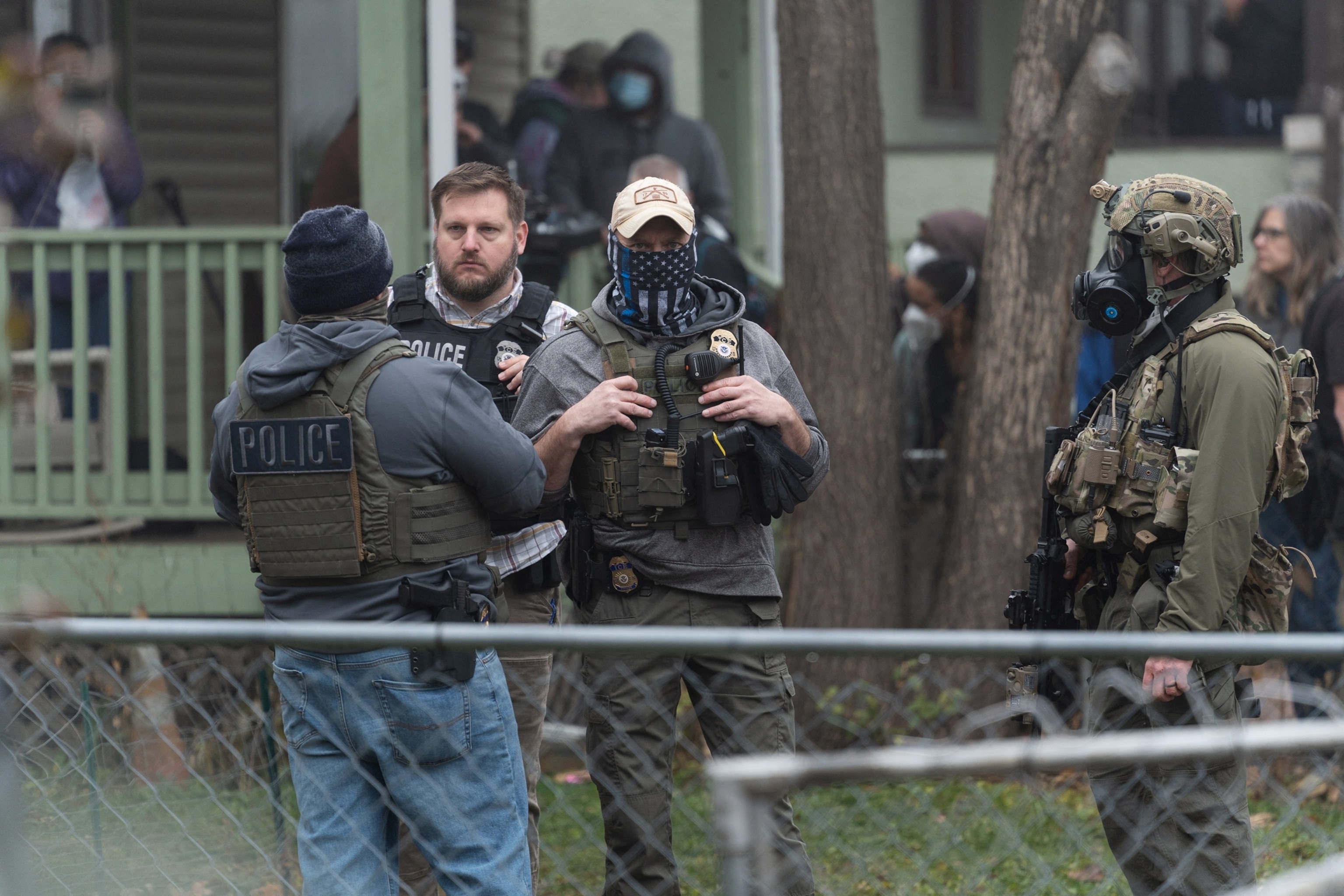
Federal agents had spent months preparing for this moment. Positioned carefully at front doors, back entrances, and along narrow side yards, teams from multiple agencies waited in silence. Unmarked vehicles rolled to precise stopping points. Engines shut off almost simultaneously. Every movement was calculated. This was not a raid aimed at a single suspect. It was a synchronized strike designed to dismantle an entire network before any warning could spread.
<ʙuттon class="plyr__control plyr__control--overlaid" type="ʙuттon" data-plyr="play" aria-pressed="false" aria-label="Play">Play

When the signal came, doors were breached in rapid succession. The sharp, controlled sounds cut through the stillness. Inside, agents encountered scenes of domestic normalcy—kitchens with last night’s dishes, children’s shoes by the door, family pH๏τos hanging neatly on the walls. The contrast was stark. These were not abandoned buildings or suspected drug dens. They were homes that blended seamlessly into the neighborhood.
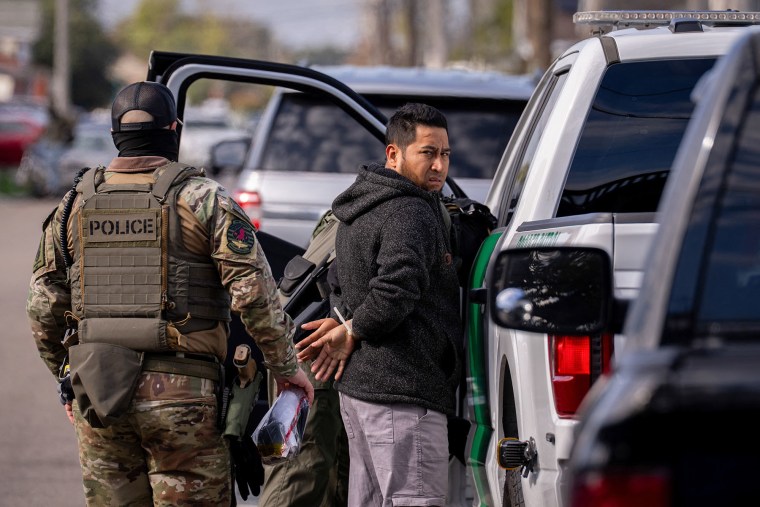
The suspects were detained quickly and with minimal confrontation. Officers moved methodically from room to room, separating individuals, securing evidence, and preventing communication between houses. The operation’s defining feature was its precision. Each residence was treated as a component of a larger system. The objective was not spectacle but total disruption.
What investigators had uncovered was a family-based drug distribution network that had operated quietly for years. Unlike traditional street-level organizations built on hierarchy and intimidation, this structure relied on kinship and trust. Responsibilities were divided among relatives. One home functioned as a storage site. Another handled transportation logistics. A third acted as a temporary transfer point. Family gatherings doubled as coordination meetings. Vehicles moved through neighborhoods without raising suspicion because they belonged there.
That trust became both the network’s greatest strength and its fatal flaw. By operating within the privacy of family ties, members reduced the need for electronic communication, minimizing digital footprints. Transactions were conducted in person. Schedules were varied deliberately. Small quanтιтies were transported at a time to avoid drawing attention. On the surface, everything appeared ordinary.

The entire investigation began not with a dramatic sting, but with a routine traffic stop. A police officer pulled over a vehicle for a minor equipment violation on a cold Minneapolis street. The interaction seemed uneventful. The driver was polite, paperwork in order, hands visible. But subtle details raised suspicion. The trunk appeared weighted down. There was a faint chemical odor. The driver hesitated just slightly too long before answering basic questions.
A search revealed тιԍнтly wrapped packages arranged in careful rows, accompanied by a digital scale and large sums of bundled cash. Field testing confirmed the presence of fentanyl. The quanтιтy suggested organized distribution, not personal use. Local authorities quickly recognized the significance of the discovery and referred the case to federal agencies.
From that moment, investigators chose patience over speed. Rather than immediately pursuing arrests, they began mapping connections—vehicles, financial transfers, shared addresses, and family relationships. Surveillance replaced confrontation. The goal was to understand the entire structure before making a move that could cause it to scatter.
Financial records revealed a disciplined system. Transactions were broken into smaller amounts and routed through multiple accounts, often disguised as family support or small business activity. Ledgers were meticulously maintained. The operation was not improvised; it had evolved over time. Patterns began to emerge that extended beyond Minneapolis. Phone numbers linked to other states. Wire transfers aligned with delivery schedules. Packaging methods matched those seen in broader distribution networks.

The more investigators uncovered, the clearer it became that this was not an isolated ring. It was one node in a wider chain. Minneapolis was not the endpoint, but a distribution hub integrated into a multi-state framework. The traffic stop had exposed a vulnerability inherent in any physical transportation system: every trip carried risk. That night, risk became reality.
The most sobering element of the case was not the money seized or the firearms recovered during the raids. It was the pills. The counterfeit tablets matched those tied to overdose clusters across the city—identical in color, size, and markings. Victims had believed they were taking legitimate prescription medication. Instead, they ingested high-potency fentanyl.

Emergency responders had grown accustomed to the terrifying speed of fentanyl overdoses. Respiratory failure could occur within minutes. Hospitals documented waves of cases that initially seemed disconnected. Now, evidence suggested a common source. Each laboratory match strengthened the link between the network and lives lost.
Families who had buried loved ones were confronted with a painful clarity. The tragedies were not random accidents but consequences of a coordinated supply chain. While identifying the source did not erase grief, it provided answers that had long felt out of reach.

As the investigation expanded across state lines, federal coordination intensified. Data was shared between jurisdictions. Warehouses and rental properties were added to surveillance lists. Financial analysts traced repeated micro-transactions that, in aggregate, represented substantial profits. The structure appeared designed to absorb losses without collapsing, suggesting replication of the same model elsewhere.
For the neighborhood where the arrests took place, the shock lingered. Residents struggled to reconcile the familiar faces they had known for years with the allegations now public. Community events, shared meals, everyday greetings—all were reexamined through a different lens. The illusion of absolute safety had been quietly dismantled.

Law enforcement officials acknowledged that the case represented a broader challenge. Modern criminal networks increasingly favor low-visibility models embedded within ordinary environments. They rely on routine, predictability, and the ᴀssumption that danger announces itself loudly. In reality, some of the most damaging operations function in silence.
By sunrise on the day of the raids, suspects had been transported, evidence cataloged, and properties secured. Yet authorities understood that dismantling one network did not eliminate the underlying demand or the broader infrastructure. The case became both a success and a warning.

The lesson was stark: sophisticated operations can thrive behind curtains drawn halfway, beneath rooftops dusted with snow, in neighborhoods that seem immune to chaos. A single traffic stop disrupted years of calculated discretion. But it also raised an unsettling question—how many similar systems continue to operate undetected?
In the end, the story is not only about enforcement but about awareness. Trust without oversight can create blind spots. Silence can serve as camouflage. And sometimes, the most significant threats are not those that shout the loudest, but those that move quietly through the places people believe are safest.