
The security feed at the secluded estate didn’t just fail—it was excised. At exactly 12:50 a.m., every lens on the property went to static at the exact same microsecond. No glitch. No power surge. Just a clean, professional kill-switch.
The 12:50 A.M. Camera Blackout That Shifted an Entire Investigation
Authorities are intensifying their search after the late-night abduction of Nancy Guthrie, the 84-year-old mother of television host Savannah Guthrie, took a dramatic turn following a disturbing technical clue discovered inside the family home. What was initially believed to be a terrifying but straightforward break-in has now evolved into a far more calculated and unsettling investigation, centered on the precise moment the home’s security cameras went dark.
According to investigators, every camera in the residence stopped recording at exactly 12:50 a.m. — a shutdown so precise that technicians ruled out coincidence almost immediately. The security system, described as modern, layered, and difficult to breach, did not fail due to power loss, weather conditions, or internal malfunction. Instead, experts now believe it was manually disabled by someone with intimate knowledge of how the system operated.
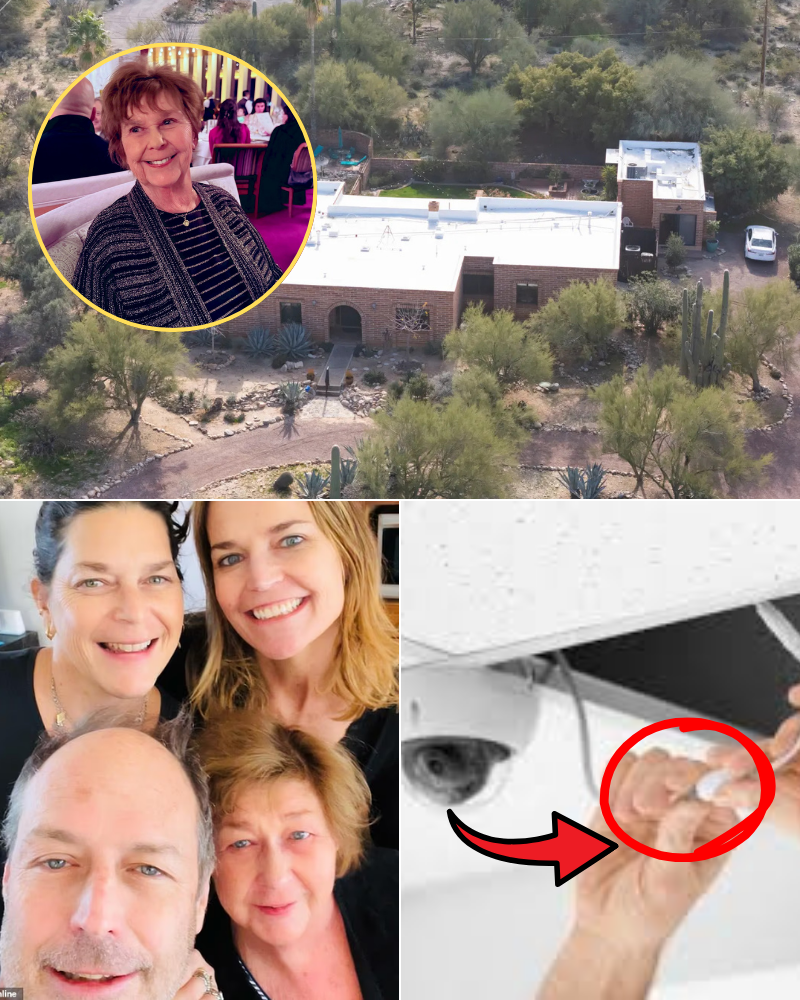
The revelation has pushed the case in an entirely new direction. What began as a burglary-turned-kidnapping now appears to be an insider operation carried out by an individual who, in the words of one investigator, “knew the house inside out.”
Officials have not publicly named any suspects, but sources familiar with the investigation say detectives are now focusing heavily on individuals with previous access to the home — including contractors, extended acquaintances, former employees, and anyone who may have been given temporary access to the property. While authorities maintain that nothing is being ruled out, the emerging picture suggests a perpetrator who did not simply stumble upon a vulnerable target, but instead executed a plan guided by familiarity and precise timing.
The Discovery of the Camera Shutdown
The security video analysis was among the first steps taken after the abduction was reported. Footage leading up to the disappearance showed normal activity inside and outside the property. Nothing appeared unusual, and no unfamiliar individuals were observed entering the area. Then, at 12:50 a.m., the feed abruptly cut.
Experts examining the system found no sign of forced tampering on the exterior panels. There were no scratches, no pried-open components, and no hardware damage. The shutdown was clean — almost too clean.
Investigators determined that whoever disabled the cameras did so from within the home’s internal interface, a platform protected by multilayer authentication. While it is technically possible for an outside hacker to infiltrate such systems, early forensic analysis revealed no digital breach from the outside. Instead, the system was accessed via credentials normally reserved for trusted family members and property managers.
This immediately raised concerns among detectives. It suggested that the culprit either possessed or had previously observed access codes, security protocols, and the home’s camera grid layout. The precision of the shutdown, occurring at a non-rounded timestamp rather than at the top or bottom of the hour, only reinforced suspicions that the person behind the act was carefully watching the household’s nightly patterns.
The Abduction Timeline Emerges
Authorities believe the abductor entered the home shortly after the cameras went offline. There were no broken windows, no damaged locks, and no signs of forced entry — another indicator that the individual may have used a legitimate access method, such as a code or keycard.
Nancy Guthrie was last seen by a caregiver earlier in the evening. She was described as in stable health but requiring ᴀssistance with mobility. Investigators say the abductor appears to have moved her swiftly, quietly, and without triggering any audible alarms.
A neighbor later reported hearing a vehicle door close sometime between 1:05 and 1:15 a.m., though the witness could not identify the model or direction of travel. The street was otherwise silent.
The lack of noise, struggle, or evident disturbance has baffled investigators, leading them to conclude that the abductor likely possessed not only access but also familiarity with Nancy’s routines, limitations, and vulnerabilities.
Law Enforcement Shifts Strategy
Initially, investigators considered the possibility of a random home invasion, but the new technical findings have caused a dramatic shift in strategy. Detectives are now combing through visitor logs, contractor records, and past maintenance appointments to uncover anyone who may have gained temporary access to the home in recent years.
One law enforcement source stated that the level of sophistication seen in this case is “not something you get from a random trespᴀsser or opportunistic criminal.” Instead, the evidence points toward a perpetrator who may have spent days or weeks preparing for the moment the cameras would be disabled.
Authorities are also reviewing digital footprints on the home’s internal security dashboard, including previous logins, time-stamped adjustments, and user-approved changes made in the months leading up to the disappearance. These records may reveal whether the culprit tested the system beforehand.
Family and Public Reaction
The disappearance has attracted national attention due to Savannah Guthrie’s public profile, but authorities emphasize that the focus remains on locating Nancy safely and identifying the person behind the calculated abduction.
Family members are said to be cooperating fully with investigators. Representatives have released limited public statements, citing the sensitivity of the ongoing investigation and their hope for a swift and safe return.
Officials have urged the public to report any sightings, suspicious activity, or unfamiliar vehicles observed around the area in the early morning hours preceding the incident. Tip lines have been flooded with messages, though investigators acknowledge that many are speculative.
What the Insider Theory Suggests
If the abduction was indeed orchestrated by someone familiar with the home, several possibilities rise to the forefront:
A former employee or caregiver with past access
A contractor involved in maintenance or renovation
An acquaintance with observed or memorized codes
Someone with knowledge of the homeowner’s routines
A person aware of vulnerabilities in the home’s layout
The precision of the 12:50 a.m. shutdown suggests more than casual familiarity — it indicates planning, technical awareness, and confidence in manipulating the environment without leaving immediate traces.
The Investigation Moves Forward
Authorities are now mapping out a timeline of every individual who had access to the property over the past several years. Detectives are also expanding the search area based on potential vehicle routes and time-stamped neighborhood surveillance footage.
As the investigation continues, the 12:50 a.m. camera blackout remains the most critical piece of evidence — a moment so precise and calculated that it may ultimately reveal who orchestrated the abduction and why.
For now, the only certainty is that the individual responsible knew exactly what they were doing.
